

The Race and Regency Pod works as a dynamic sonic space to lend an ear to all things Race and Regency. Using the intimacy, accessibility, and fluidity of the medium, this podcast brings together the public, artists, curators, librarians, scholars, and cultural critics who share their passion for questions of race in this period. Unlike ideas and engagements that can often stay confined behind academic paywalls, this podcast facilitates space for community members, and connoisseurs of the Regency era to think together and build together.
Listening with and to a range of people who speak in varied accents and tones, The Race and Regency Pod works as a practice in embodied scholarship. We imagine what enthusiasm and engagement sound like when directed towards sharing, community building, resistance, and self-expression. This podcast will house diverse conversations that expand the conception of the Regency era thematically, geographically, and temporally, by considering how we inherit formulations of race from this period and engage with them now.
Episodes
1. The Lab and the Pod with Dr. Patricia Matthew
In this episode, we are joined by the director of the Race and Regency Lab Dr. Patricia Matthew, who is an Associate Professor of English, Montclair State University. We talk about the vision behind The Race and Regency Lab and what we hope to accomplish with The Race and Regency Pod. Join us to discuss all things regency and race!
2. Austen, Race and Regency with Dr. Devoney Looser
We are joined by Dr. Devoney Looser, a writer and professor at Arizona State University. Devoney talks about her new book, Wild for Austen (Macmillan), which honors and explores Austen's writings, life, and legacy, just in time for the celebration of her 250th birthday on December 16. 2025!
Dr. Devoney Looser has worked on nine books, written essays in The Atlantic, the New York Times, Salon, The TLS, and the Washington Post, and spoken about Austen on several platforms including CNN. She has received several recognitions including a Guggenheim Fellowship.
To learn more about Dr. Devoney Looser, visit her website.
3. Reflecting on the Romantic Archive with Dr. Mathelinda Nabugodi
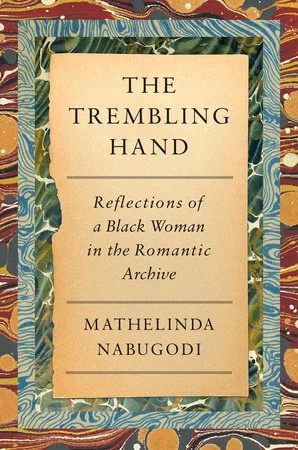
We are joined by Dr. Mathelinda Nabugodi. She is a Lecturer in Comparative Literature at University College London. She has previously held post-doctoral fellowships at Cambridge and Newcastle, including in the literary archive at the Fitzwilliam Museum. She is the author of Shelley with Benjamin: A Critical Mosaic (2023) and one of the editors on the six-volume Longman edition of The Poems of Shelley (1989-2024). Her latest book, The Trembling Hand: Reflections of a Black Woman in the Romantic Archive, which came out only a few months ago, explores the connections between British Romanticism and the Black Atlantic.
In its deeply erudite yet personal engagement with the archive of romanticism, Mathelinda, in this book, offers us radically new reading methods that are rooted in a conscious engagement with the events in this period, while also redefining what it means to take pleasure in reading literature marred by violence.
To learn more about Mathelinda Nabugodi's book: https://www.penguinrandomhouse.com/books/719891/the-trembling-hand-by-mathelinda-nabugodi/
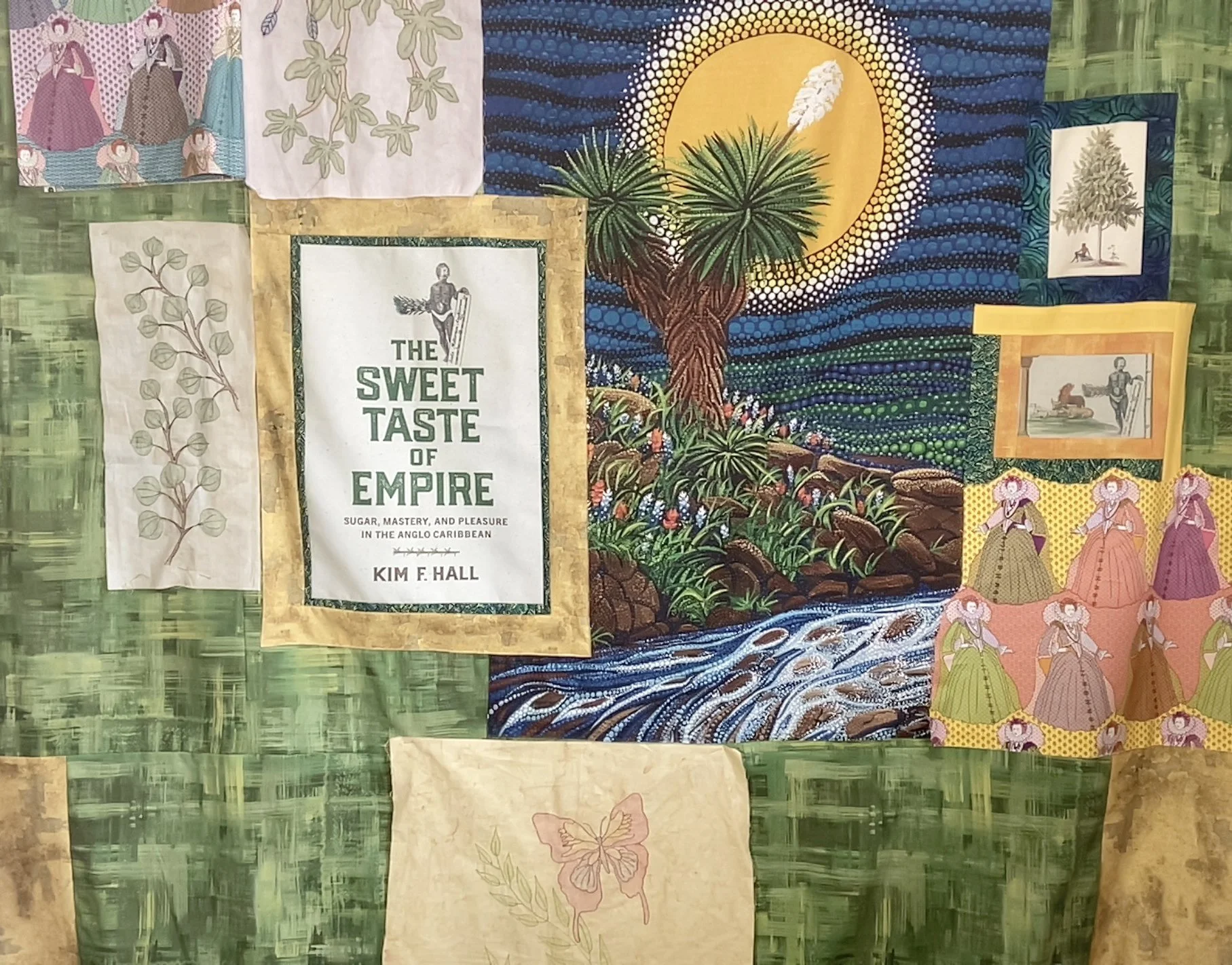
4. Sweet Taste of Empire with Dr. Kim F. Hall
Today, we are joined by Dr. Kim Hall, who is Lucyle Hook Professor of English and Professor of Africana Studies at Barnard College. Professor Hall's research and teaching cover Renaissance/Early Modern Literature and Culture, Critical Race Theory, Black Feminist Studies, Slavery Studies, Visual Culture, Food Studies, and Digital Humanities. She was born in Baltimore and holds a doctorate in sixteenth and seventeenth-century English Literature from the University of Pennsylvania.
Her first book, Things of Darkness, was published in 1996 by Cornell University Press. Her second book, Othello: Texts and Contexts(Bedford/St. Martin’s Press, was published in 2006). In this podcast she talks to us about her most recent book Sweet Taste of Empire: Sugar, Mastery, and Pleasure in the Anglo-Caribbean, which examines the roles of race, aesthetics and gender in the Anglo-Caribbean sugar trade during the seventeenth century. She is also an avid quilter who was named “Quilter of the Month” at the Seminole Sampler Quilt Shop in Baltimore, Maryland.
In this episode, she will also tell us about the “Weaving Dreams” Exhibition at Barnard College that showcases handmade quilts and other textile artifacts selected from the Dr. Hall’s oeuvre of quilt art.
5. Ornamental Blackness with Dr. Adrienne Childs
Today we are joined by Dr. Adrienne Childs. Dr. Childs is an independent scholar, art historian, and curator. She is Senior Consulting Curator at The Phillips Collection in Washington DC where she served as co-curator of the special exhibit Vivian Browne: My Kind of Protest (June—September 2025). She co-curated the exhibit The Colour of Anxiety: Race, Sexuality and Disorder in Victorian Sculpture at The Henry Moore Institute in Leeds, England and co-edited Blacks and Blackness in European Art of the Long Nineteenth Century (Routledge Press, 2014). In April 2022, The High Museum of Art awarded Childs The Driskell Prize in recognition of her contribution to African American art and art history. In this episode, Dr. Childs discusses her new book Ornamental Blackness: The Black Figure in European Decorative Arts (Yale University Press, 2025). She also discusses some of her current and future projects with us.
For more on Dr. Childs’ work, see her website https://www.adriennelchilds.com/
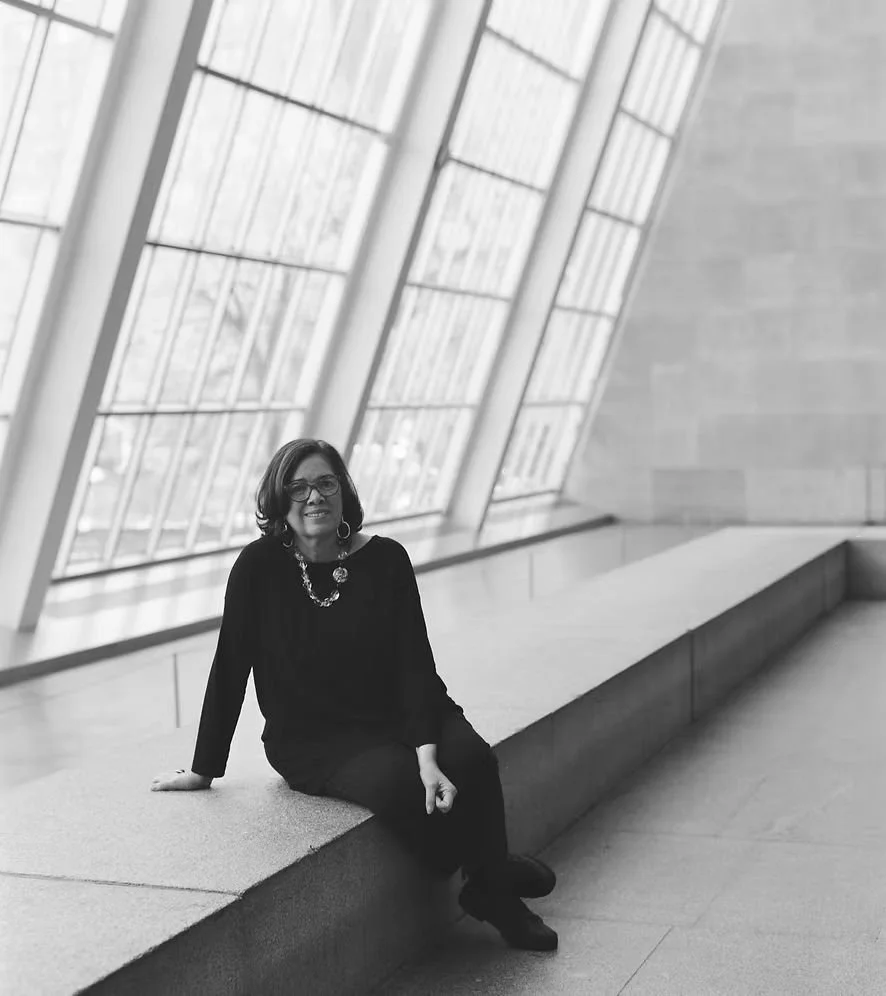
6. Wuthering Heights with Carole Bell and Adriana Herrera
Today, we are joined by Carole V. Bell and Adrianna Herrera.
Carole Bell is a cultural critic, writer, and researcher exploring media, identity, public opinion, and the politics of art and entertainment. She writes about books, movies, politics, and culture. She is a contributor to the Black Love Matters essay anthology from Berkley (Feb 2022), Parasocial Politics: Audience Readings of Cultural Politics in Pop Culture (Rowman and Littlefield), and The Encyclopedia of Social Media and Politics (Sage/CQ Press). She has also written about books and authors for print and online media, including The Atlantic, The New York Times, NPR, The Washington Post, Publishers Weekly, BookPage, Book Riot, Shondaland, and theGrio.
You can find more of her work here: https://portfolio.cvbell.com/
Adriana Herrera is a USA Today Best Seller Author. She loves writing stories about people who look and sound like her people, getting unapologetic happy endings. She has written successful romance fiction and erotica, such as her trilogy: A Caribbean Heiress in Paris, An Island Princess starts a Scandal, and A Tropical Rebel gets the Duke. She won a Ripped Bodice Award in 2020 and the Audie Award in 2023.
You can find more of her work here: adrianaherreraromance.com
Carole and Adrianna share with us their thoughts on the new adaptation of Wuthering Heights by Emerald Fennell. They also leave us with some incredible recommendations for what to read and watch to satisfy the historical fiction hunger that might emerge post-Wuthering Heights.

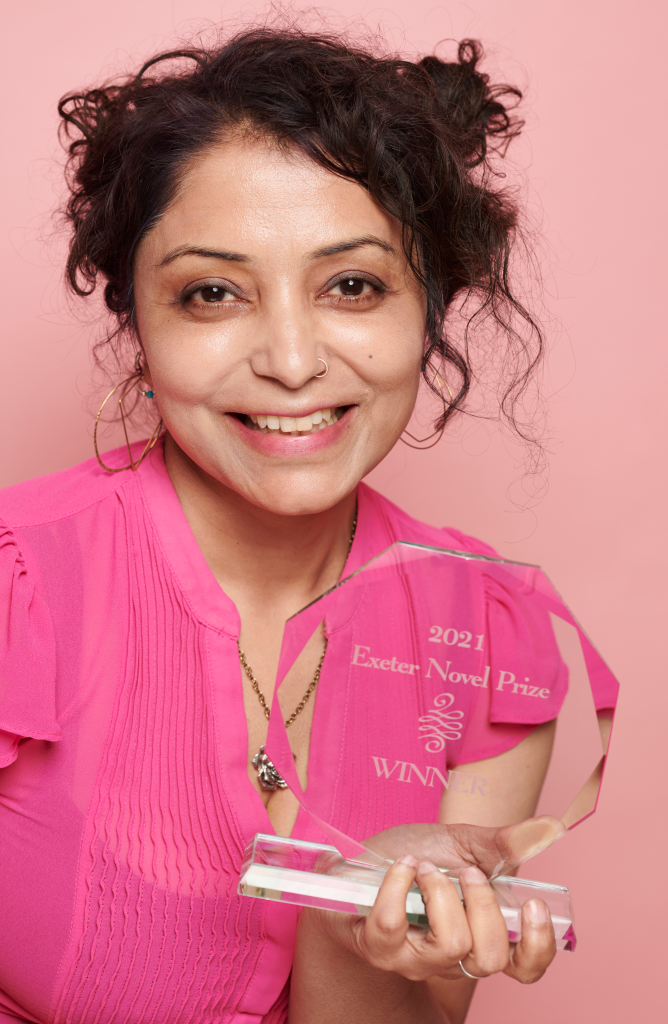
7. Writing Regency Fiction with Amita Murray
Today we are joined by Amita Murray. Amita is a writer based in London, by way of Delhi and California. Her first novel, The Trouble with Rose, came out from Harper Collins in 2019, and her short fiction has won the SI Leeds Literary Prize, and has appeared in Wasafiri, SAND Berlin, the Berkeley Fiction Review and others. She's held writerly residencies with Leverhulme/University College London and Plymouth University/Literature Works, and has taught advanced fiction at the University of East Anglia and CityLit London. She was named runner-up for the 2022 CRIMEFEST scholarship for authors of color.
We discuss her work, paying special attention to her historical romance trilogy set in Regency England, where the mixed-race Marleigh sisters each go through a journey of adventures and love.
Amita also shares some tips for young aspiring writers on her instagram @amitamurray.
Find her online @AmitaMurray and www.amitamurray.com.
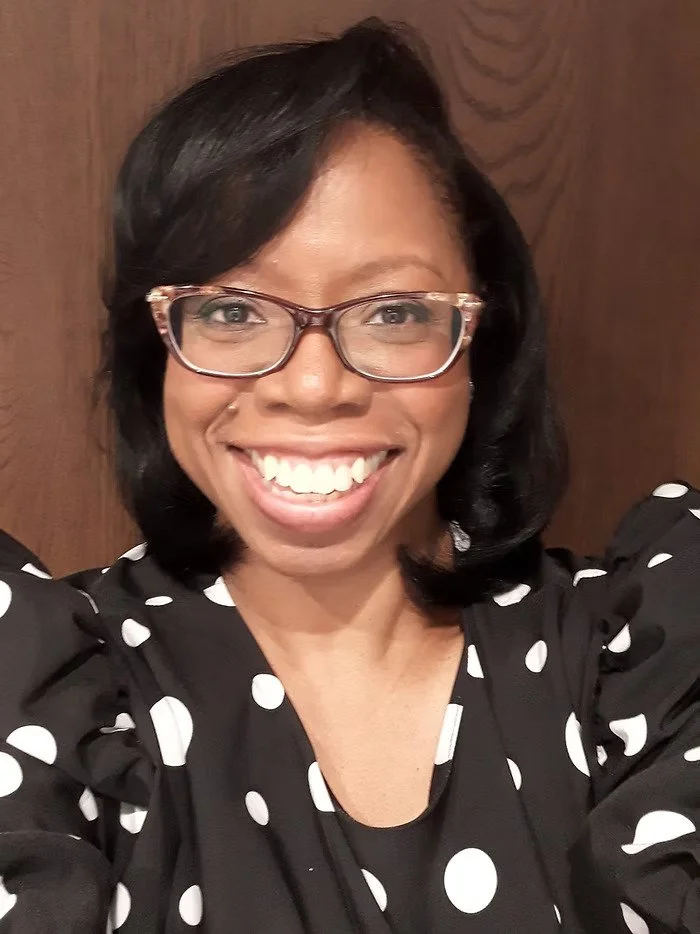
8. Black Girl Loves Jane with Damienne Scott
In this episode, we are joined by Damienne Scott, who is a Professor, scholar, critic, and advocate. She is the founder and moderator of the community Black Girl Loves Jane, a Facebook group devoted to promoting and celebrating diversity within the Austen community.
Dami supports an inclusive online environment for readers and lovers of Austen and demonstrates how people with different cultural identities and who come from various backgrounds find meaning and importance in the writings and stories of Austen.
Dami has conducted interviews on her work for various outlets and been spotlighted by the Jane Austen Summer Program on multiple occasions. She has also published “Sanditon and the Pineapple Emoji Craze” in Persuasions Online.
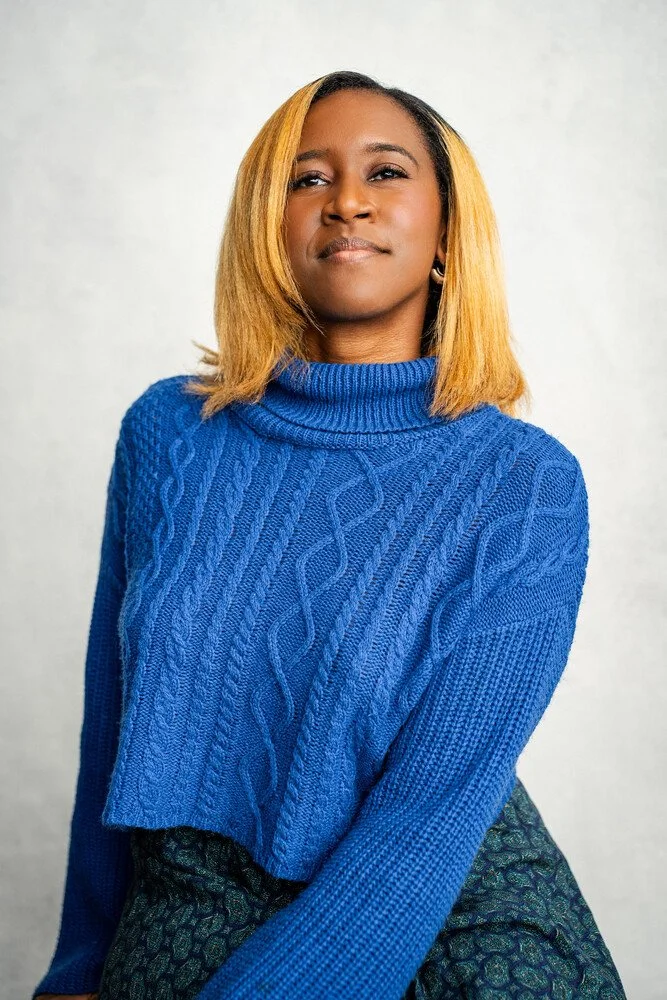
9. Art, Race, and Regency with Camille Simone Thomas
We are joined by Camille Simone Thomas who is a Playwright, Producer, Performer, Researcher, Educator, Aspiring TV writer, Facilitator, Business Owner, and all around Creative.
Camille Simone Thomas is a 5th generation Detroiter through her father’s side and a first generation Jamaican through her mothers. It’s important for her to name this because her work most often interrogates cultural legacies, familial healing, spirituality + ancestral wisdom, and the general kicking and screaming of how Black folks get free despite the oppressive forces of colonialism, capitalism, and white supremacy. Her plays have been workshopped and performed at The Connelly Theatre, New York Theatre Workshop, Playwrights Horizons, Sanguine Theatre Company, Blackboard Playwriting series, Lime Arts Theatre company, American Slavery Project, The Obie Award-winning Harlem9 and Detroit Public Theatre Company, Dixon Place, Workshop Theatre, Barter Theatre Company, The National Women’s Theatre Festival, The Brick, and more!
In this episode, she shares a little bit of her artistic journey and upcoming projects with us, and talks also about her work at the Folger Library where she was an Artistic Fellow.
She was a 2023 Broadway Advocacy Coalition Artivism fellow where her play “What We Deserve” premiered as a staged reading at MCC theatre and has had additional fellowships with The Caribbean Cultural Center African Diaspora Institute’s DEAR fellowship, Theatre Producers of Color, and Reel Sisters film fellowship.
She was a 2024 finalist for the Eugene O’neill NPC for her play “At God’s Back”. A 2023 New Harmony Project finalist, 2023 Hedgebrook Writers retreat finalist, 2023 Catskills Creative Residency finalist, a 2023 Van Lier New Voices Fellowship Semi-finalist and a 2022 Art House Inkubator Finalist. Most recently her play “Mud or when things get messy and how we live with it” had it’s Off-Broadway premiere at the Connelly Theatre in August 2024 with SheNYC theatre festival.
To learn more about Camille’s work, check her website out: https://www.camillesthomas.com/
And follow her on instagram at @camille4real
10. Persuasion in/and the World of Austen with Rae Greiner
Today we have as our guest Dr. Rae Greiner, who is an Associate Professor of English at Indiana University, author of Sympathetic Realism in Nineteenth-Century British Fiction (2012), and co-editor of Victorian Studies.Rae edited the 2025 Norton critical edition of Persuasion. In this podcast, we talk about Persuasion, Austen’s ever-present relevance to our world, and Rae’s upcoming projects, including the book Stupidity after Enlightenment.
For information about the Norton Critical edition of Persuasion edited by Dr. Rae Greiner, see: https://wwnorton.com/books/9781324070740
Stream on:



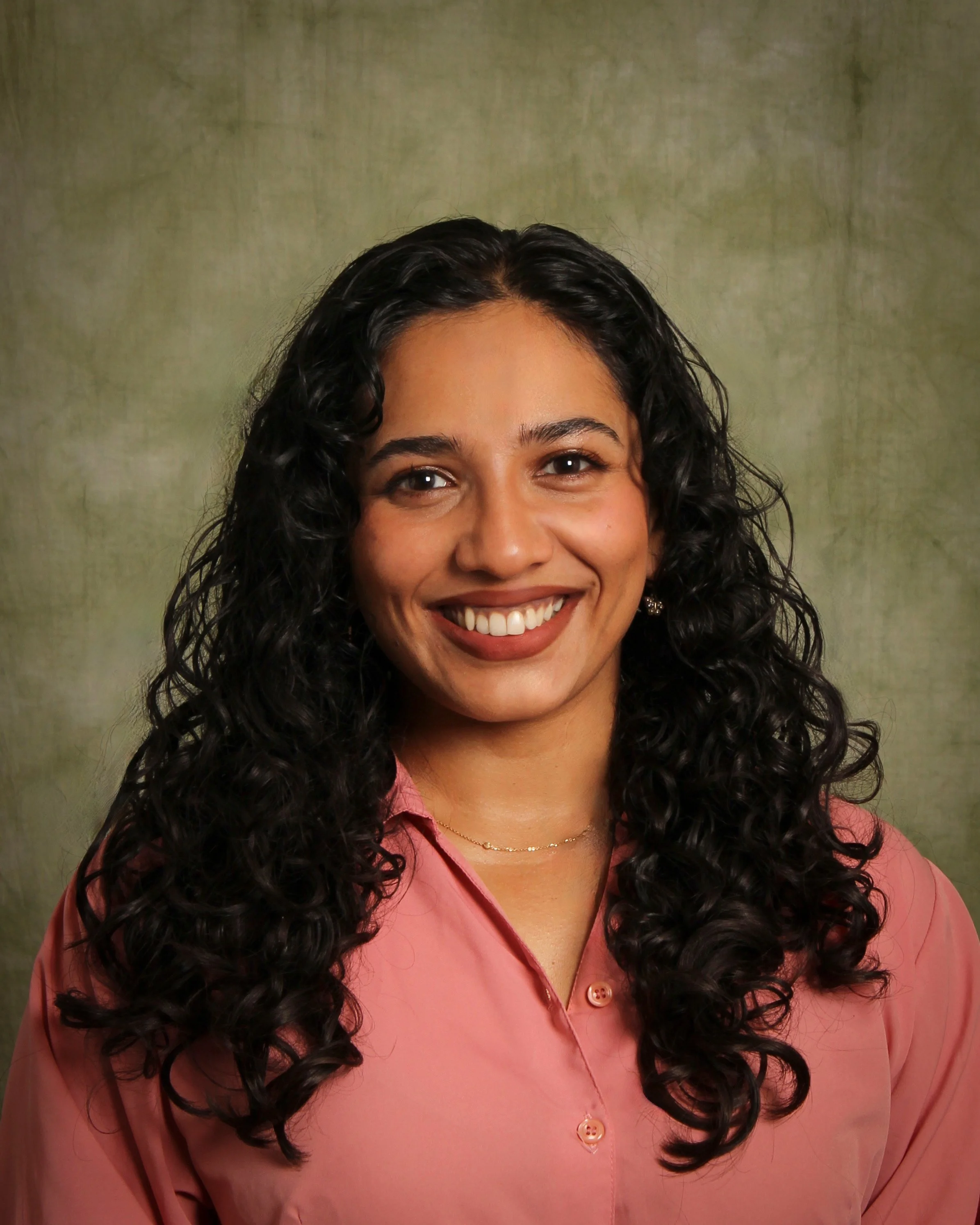
This podcast is produced and hosted by Shruti Jain. She is a PhD candidate in the English Department at Binghamton University, SUNY. Her dissertation is interested in the entanglements of Race and Caste in Enlightenment culture. Her work has been published/is forthcoming in Studies in English Literature 1500-1900, Eighteenth-Century Fiction, Journal of Eighteenth-Century Studies, Public Humanities. In addition to her work in British studies, she works on community engaged public humanities projects. She hosts and produces podcasts like Immigrants Wake America, Confluence: Humanities in the Public Sphere, and contributes to the New Books Network. She is currently editing a section and co-writing a chapter for the Handbook of Humanities Podcasting (forthcoming).